LetX로 함께 LaTeX를 써봐요.
LetX는 학생과 연구팀을 위한 무료 온라인 협업 LaTeX 에디터예요. 몇 초 만에 컴파일하고, 실시간으로 함께 작업하고, 출판 전 작업은 비공개로 지키세요.
\documentclass{article}
\usepackage{amsmath}
\begin{document}
\begin{align*}
  e^{i\pi} + 1 &= 0 \\[1ex]
  \int_{0}^{\infty} e^{-x^2} dx &= \frac{\sqrt{\pi}}{2}
\end{align*}
\end{document}
실제 편집 세션
팀을 초대하고, 실시간으로 함께 편집하고, 몇 초 만에 PDF로 컴파일해 보세요. LetX가 실제로 작동하는 방식 그대로예요.
Synergistic Application of Machine Learning and Computer Vision for the Detection of Exoplanets and Stars
Shihab Shahriar Antor Ashraful Kabir Alif
Department of Computer Science, BRAC University
Abstract— We present a framework that detects faint exoplanets in JWST/MIRI coronagraph imagery using contrastive and few-shot learning, separating planetary signals from bright host stars under low signal-to-noise. On held-out fields it outperforms CNN and GNN baselines while using far fewer labels.
Keywords: exoplanets, direct imaging, contrastive learning, few-shot learning, JWST
1. Introduction
Figure 1: JWST/MIRI direct imaging of a faint exoplanet (b) beside its host star.
Direct imaging of exoplanets is fundamentally limited by the overwhelming glare of the host star. Modern coronagraphs on JWST/MIRI suppress this stellar light, yet faint planetary signals remain buried in structured noise. As shown in Figure 1, the planet sits within the diffraction pattern of its star, making detection a needle-in-a-haystack problem. We cast this as a representation-learning task and show that contrastive objectives recover signals that pixel-wise classifiers miss.
2. Method
We learn a discriminative embedding with a contrastive objective, pulling together augmented views of one source and pushing apart star and planet candidates:
A few-shot head then adapts to new instruments from a handful of labelled detections, which is critical given the scarcity of confirmed direct-imaging targets.
3. Results
On held-out fields the model recovers 92% of injected planets at a false-positive rate below 0.1 per frame, outperforming CNN and GNN baselines by 14 and 9 points of recall respectively.
완료됐어요. 그림이 잘 표시돼요. 언제든지 무료로 다시 컴파일할 수 있어요.
전 세계 대학의 학생과 교수진이 사용하고 있어요
BRAC 대학교, 뮌헨 공과대학교, 함부르크 대학교, UPC 바르셀로나, 오타와 대학교 등 70+개국의 530+개 대학 및 연구실에서 학생과 연구자들이 LetX로 글을 쓰고 있어요.
실시간 협업
실시간으로 함께 쓰세요. 편집 내용이 충돌 없이 병합돼요. 더 이상 .tex 파일을 이메일로 주고받거나 서로 덮어쓸 일이 없고, 전체 버전 기록으로 어느 시점으로든 되돌릴 수 있어요.
- 충돌 없는 편집(Yjs CRDT)
- 협업 인원 무제한: 무료
- 전체 버전 기록
Direct Imaging of Exoplanets
Coronagraphs on JWST/MIRI suppress the host star’s glare, yet faint planetary signals stay buried in structured stellar noise.
We recover them with contrastive and few-shot learning, separating planet candidates from the star even at very low signal-to-noise.
문서를 직접 편집하는 어시스턴트
평소 쓰는 말로 요청하세요. Lexi가 프로젝트를 읽고, 변경 사항을 제안하고, 직접 컴파일해 정상적으로 빌드되는지 확인한 뒤, 작업 중인 위치에 바로 적용해요.
이 화면이 바로 에디터예요
여러분의 파일, 여러분의 소스, 여러분의 PDF.
파일 트리와 LaTeX 소스, 실시간 PDF, 그리고 문서에 함께 들어와 있는 사람들을 볼 수 있어요. Lexi는 뭔가 요청하기 전까지 에디터 아래쪽에서 기다리고 있어요.
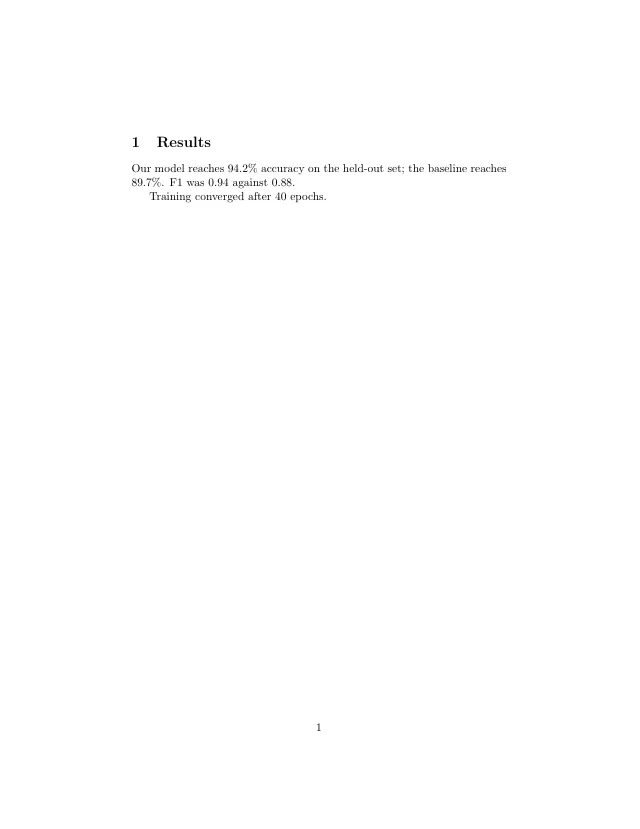
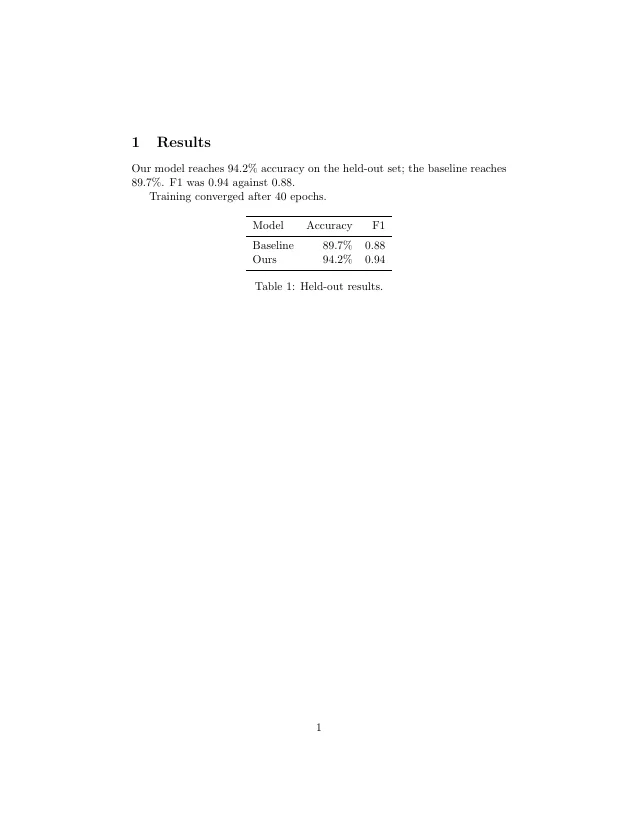
실제 도구 시퀀스를 그대로 실행하는 에디터 복제본이에요. 원하는 항목을 선택해 바로 이동해 보세요.
이미 Claude나 ChatGPT를 사용하고 계신가요? LetX는 Claude의 커넥터 디렉터리에 등록되어 있고 MCP 서버를 운영하고 있어서, 유료 플랜을 이용하시면 어시스턴트가 LetX 프로젝트를 컴파일하고 편집할 수도 있어요.
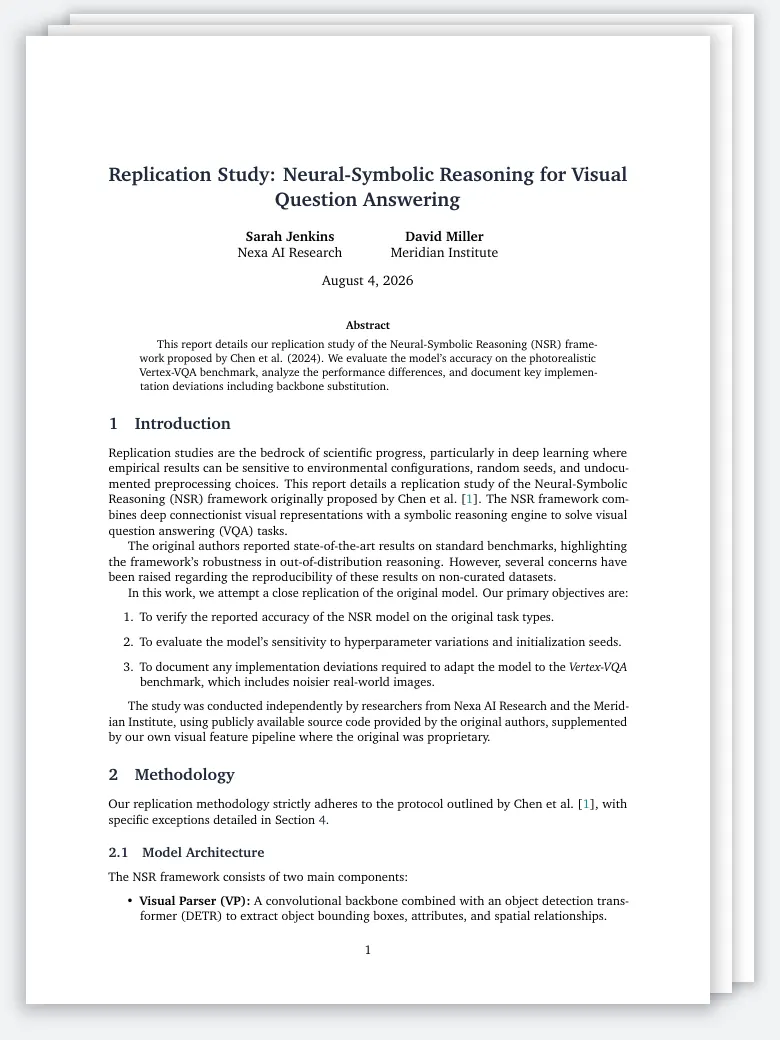
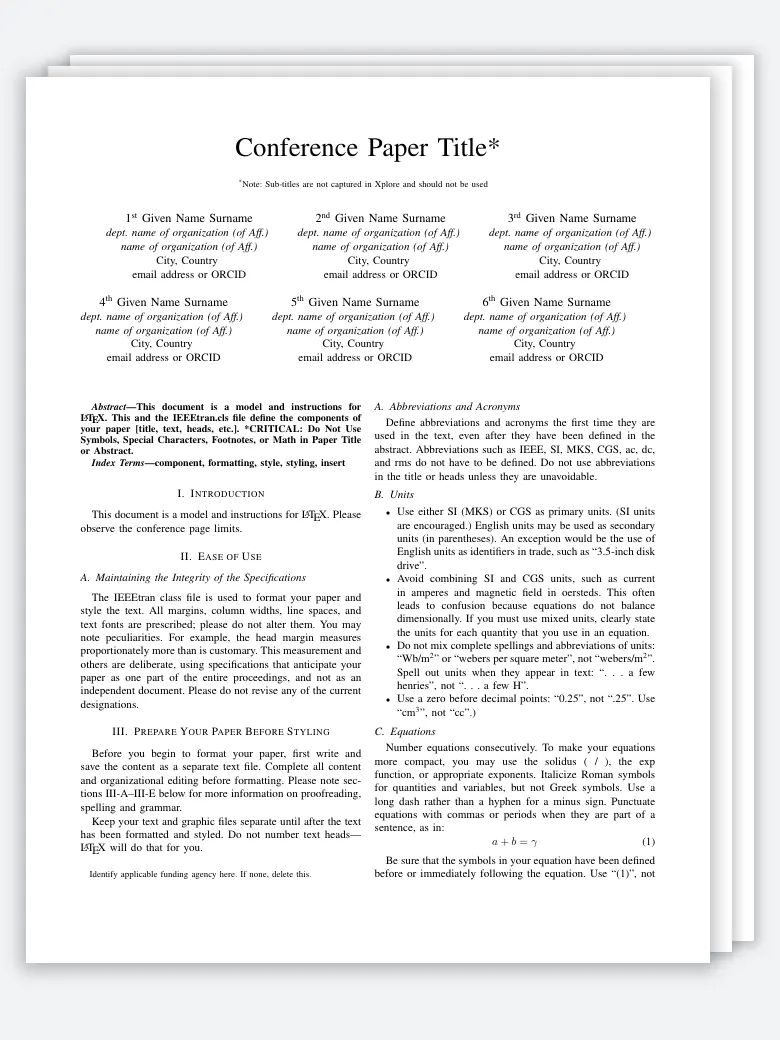
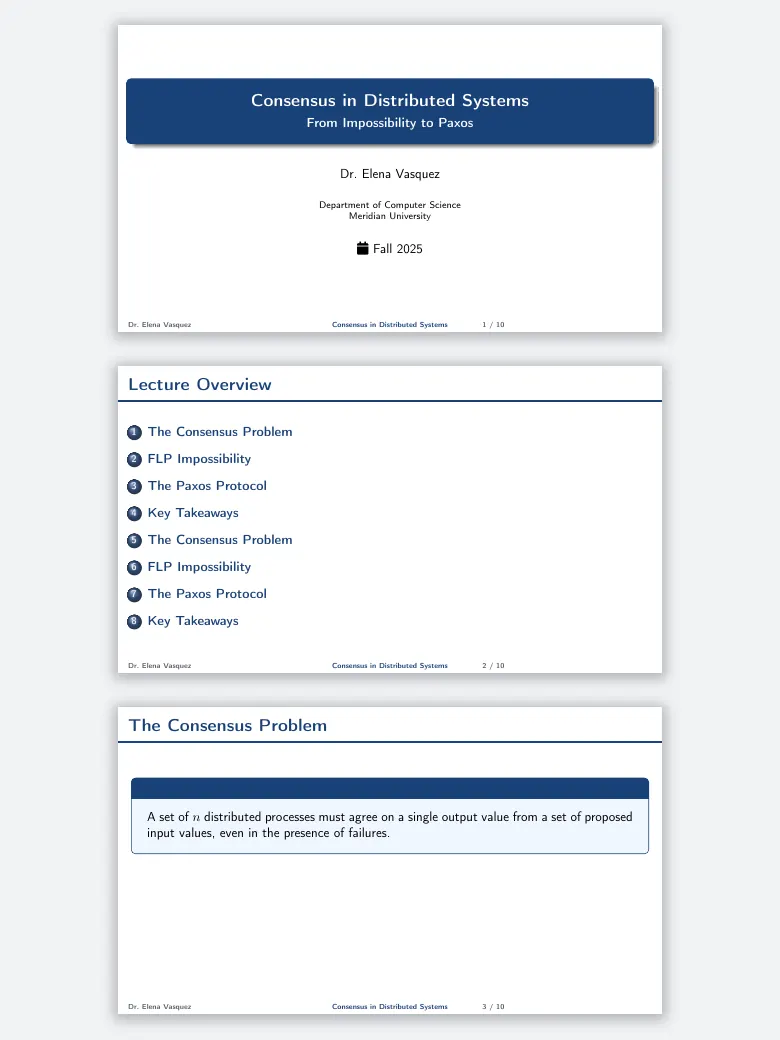
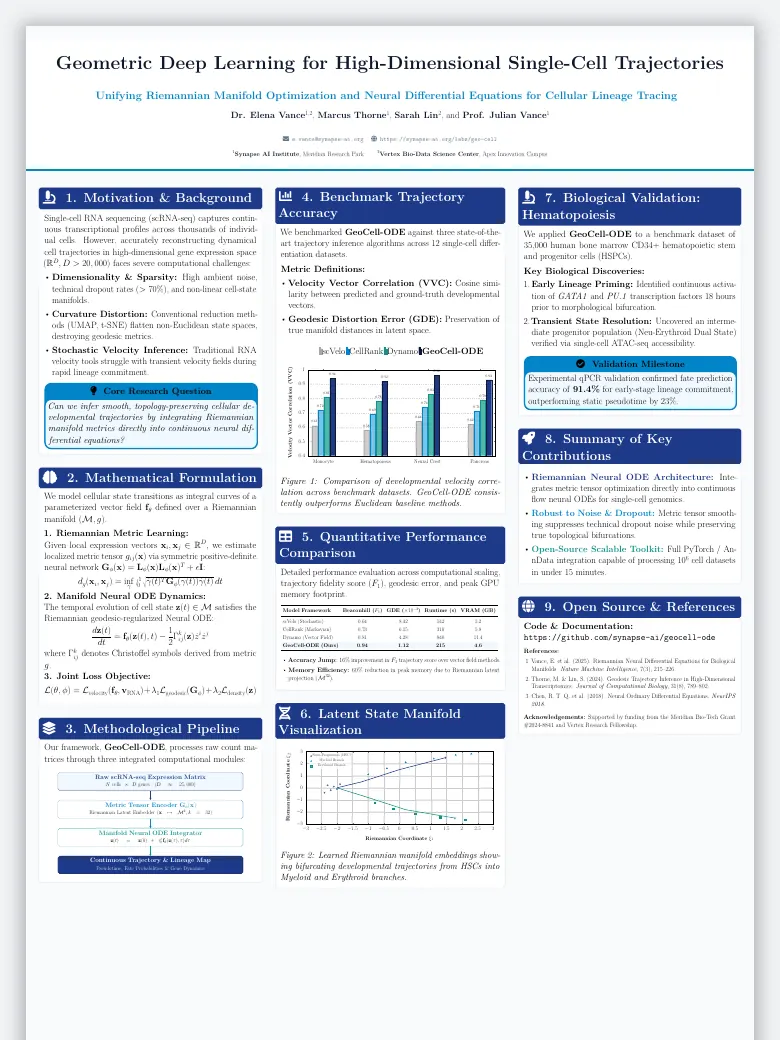
바로 쓰는 템플릿
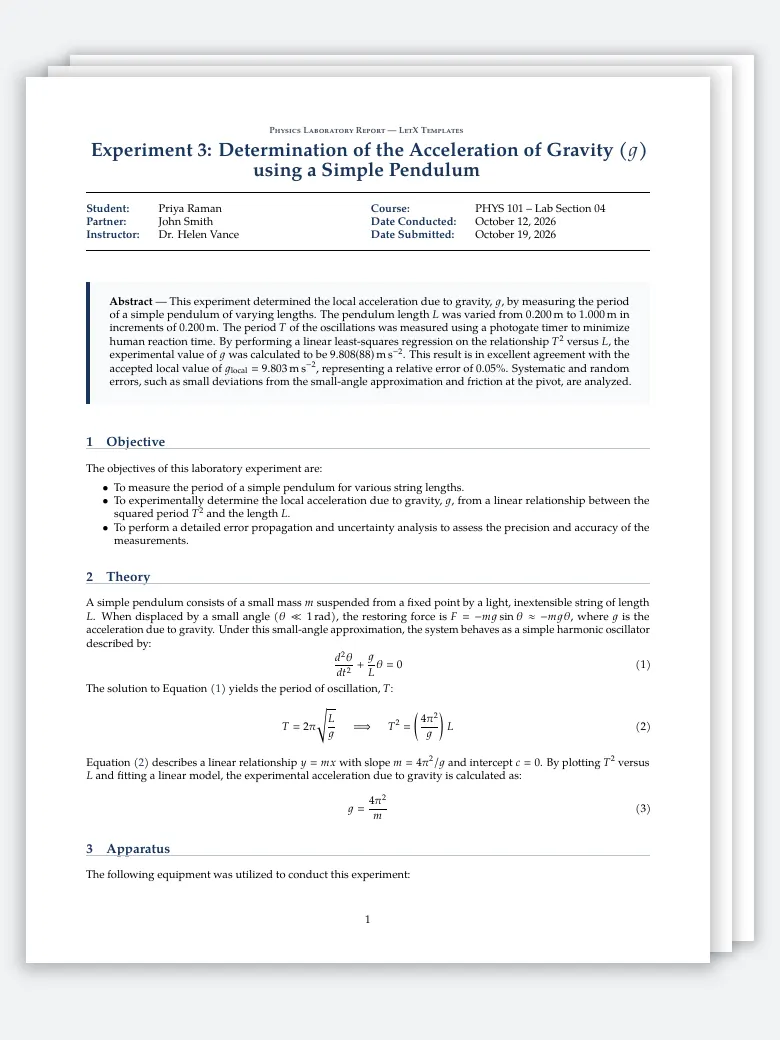
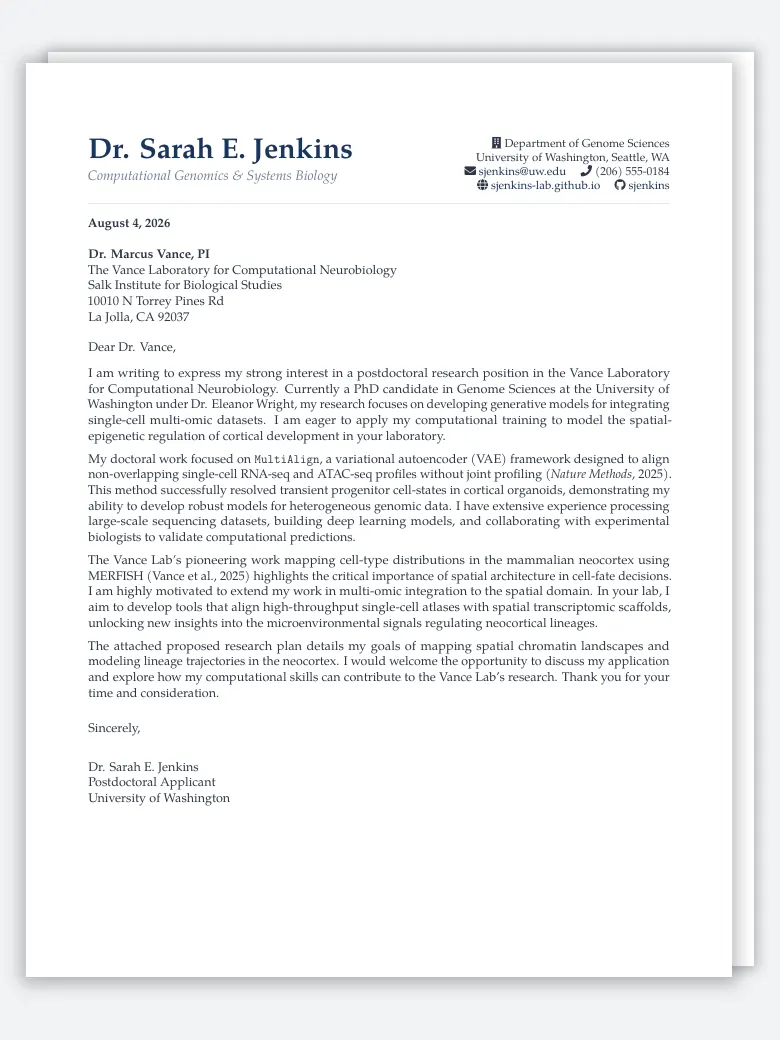
백지에서 시작하지 마세요. 학술 논문, 학위 논문, CV, 이력서 등 투고나 제출에 바로 활용할 수 있는 템플릿이 준비돼 있어요.
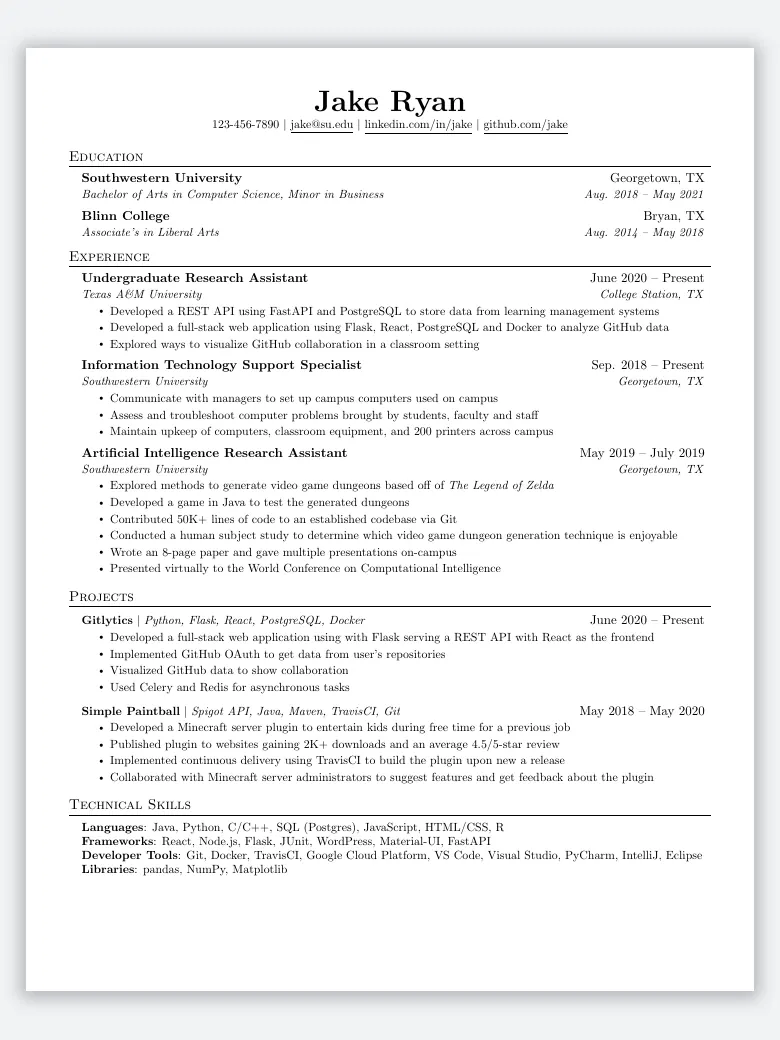
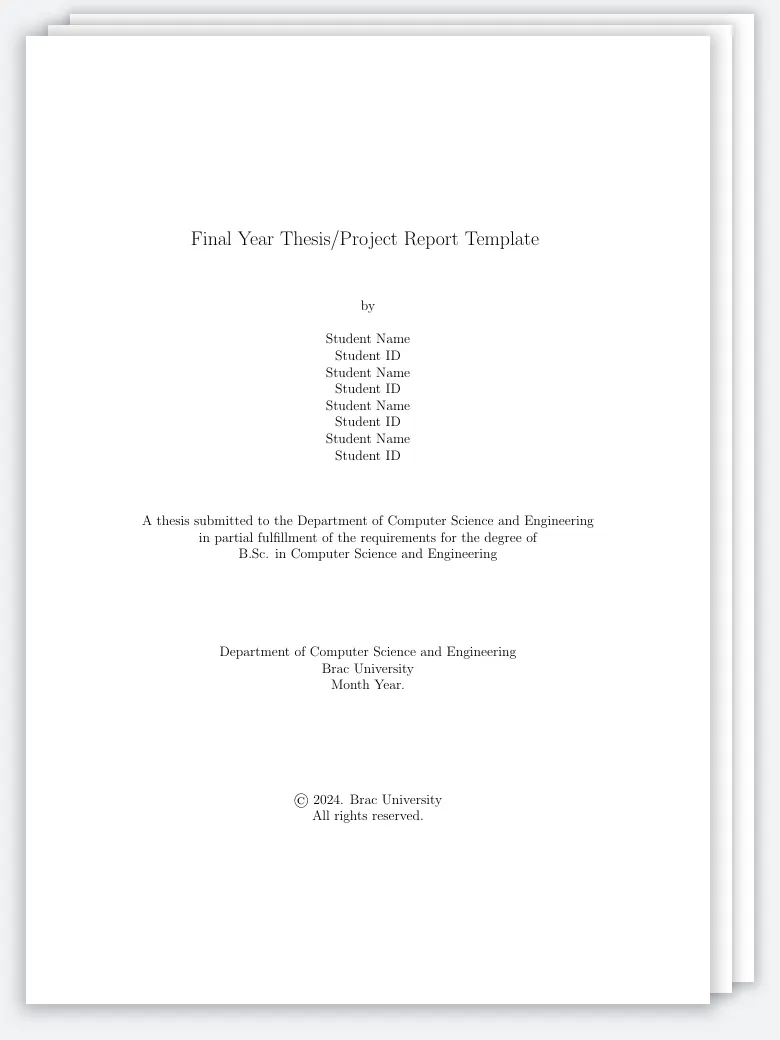
학생과 교수진에게 사랑받는 도구
학위 논문 준비 연구실부터 교수 연구실까지, BRAC 대학교와 맥길 대학교 등 여러 곳의 학생과 연구진이 LetX에서 글을 쓰는 것에 대해 전하는 이야기를 확인해 보세요.
LetX에서는 여러 사람이 동시에 편집할 수 있고, 인원 제한에 걸린 적도 없어요.
영어를 번역한 내용이에요. 이름과 소속 기관은 본인이 제공한 그대로예요.
연구자가 만들고, 연구자를 위해 만들었어요.
글쓰기의 번거로움을 없애 과학적 발견을 앞당겨요.


문의하기
질문이나 피드백이 있거나 지원이 필요하신가요? 무엇이든 들려 주시면 반갑게 답할게요.
메시지 보내기
자주 묻는 질문
온라인 협업 LaTeX 편집기 LetX에 대해 알아야 할 모든 것이에요.
LetX는 무엇인가요?
LetX는 설치 없이 브라우저에서 실행되는 Overleaf의 대안이자, 무료 온라인 공동 작업용 LaTeX 에디터예요. 팀원들이 실시간으로 함께 LaTeX를 작성하고, 몇 초 만에 PDF로 컴파일하며, SyncTeX를 사용해 소스와 결과물 사이를 오갈 수 있어요.
LetX는 무료인가요?
네. LetX는 무제한 프로젝트, 무제한 공동 작업자, 하루 40회 컴파일을 제공하며 무료로 사용할 수 있어요. 무료 공동 작업자 수를 제한하는 Overleaf와 달리, LetX는 공동 작업자당 요금을 청구하지 않으며, Pro를 사용하면 일일 컴파일 제한이 없어져요.
LetX는 Overleaf와 어떻게 다른가요?
LetX는 실시간 협업 인원을 무료로 무제한 제공해요(Overleaf는 무료 요금제에서 1명을 넘으면 유료예요). 일반적인 문서는 몇 초 만에 컴파일되고, 바로 사용할 수 있는 학술 및 CV 템플릿이 1000개 이상 있어요. 둘 다 설치 없이 브라우저에서 실행돼요.
LetX를 사용하려면 무언가를 설치해야 하나요?
아니요. LetX는 완전히 웹 기반이며 모든 최신 브라우저를 통해 Mac, Windows, Linux에서 작동해요. 설치할 LaTeX 배포판이 없으며, 컴파일은 LetX의 서버에서 실행돼요.
다른 사람들과 실시간으로 공동 작업할 수 있나요?
네. LetX는 병합 충돌 없는 실시간 편집을 위해 Yjs CRDT 기술(Figma와 동일한 알고리즘 클래스)을 사용해요. 여러 사람이 동시에 같은 문서를 편집하고 서로의 커서를 볼 수 있어요.
기존 Overleaf 또는 LaTeX 프로젝트를 가져올 수 있나요?
네. '+ 새 프로젝트'를 사용하고 'ZIP 업로드'를 선택해서 Overleaf에서 내보낸 프로젝트를 포함한 기존 LaTeX 프로젝트를 가져오세요.
누가 LetX를 사용하나요?
70+개국의 530+개 대학과 연구소의 학생 및 연구원들이 LetX에서 글을 작성해요. 가장 많이 사용하는 곳은 BRAC 대학교, 수라바야 국립대학교, 멕시코 국립자치대학교(UNAM), UC 샌디에이고, 윈저 대학교예요. 학위 논문, 학술 논문, 실험 보고서 작성에 널리 사용돼요.