Con LetX, escribamos juntos en LaTeX.
LetX es un editor colaborativo de LaTeX gratuito y en línea para estudiantes y equipos de investigación. Compila en segundos, colabora en tiempo real y mantén en privado tus trabajos sin publicar.
\documentclass{article}
\usepackage{amsmath}
\begin{document}
\begin{align*}
  e^{i\pi} + 1 &= 0 \\[1ex]
  \int_{0}^{\infty} e^{-x^2} dx &= \frac{\sqrt{\pi}}{2}
\end{align*}
\end{document}
Una sesión real de edición
Invita a tu equipo, edita en grupo en tiempo real y compila a PDF en segundos. Así funciona LetX.
Synergistic Application of Machine Learning and Computer Vision for the Detection of Exoplanets and Stars
Shihab Shahriar Antor Ashraful Kabir Alif
Department of Computer Science, BRAC University
Abstract— We present a framework that detects faint exoplanets in JWST/MIRI coronagraph imagery using contrastive and few-shot learning, separating planetary signals from bright host stars under low signal-to-noise. On held-out fields it outperforms CNN and GNN baselines while using far fewer labels.
Keywords: exoplanets, direct imaging, contrastive learning, few-shot learning, JWST
1. Introduction
Figure 1: JWST/MIRI direct imaging of a faint exoplanet (b) beside its host star.
Direct imaging of exoplanets is fundamentally limited by the overwhelming glare of the host star. Modern coronagraphs on JWST/MIRI suppress this stellar light, yet faint planetary signals remain buried in structured noise. As shown in Figure 1, the planet sits within the diffraction pattern of its star, making detection a needle-in-a-haystack problem. We cast this as a representation-learning task and show that contrastive objectives recover signals that pixel-wise classifiers miss.
2. Method
We learn a discriminative embedding with a contrastive objective, pulling together augmented views of one source and pushing apart star and planet candidates:
A few-shot head then adapts to new instruments from a handful of labelled detections, which is critical given the scarcity of confirmed direct-imaging targets.
3. Results
On held-out fields the model recovers 92% of injected planets at a false-positive rate below 0.1 per frame, outperforming CNN and GNN baselines by 14 and 9 points of recall respectively.
Listo, y la figura se renderiza. Recompila cuando quieras, gratis.
Lo usan estudiantes y docentes de universidades de todo el mundo
Estudiantes e investigadores de BRAC University, la Universidad Técnica de Múnich, la Universidad de Hamburgo, la UPC Barcelona, la Universidad de Ottawa y 530+ universidades y laboratorios de 70+ países escriben en LetX.
Colaboración en tiempo real
Escribe en equipo en tiempo real. Los cambios se integran sin conflictos: se acabó enviar archivos .tex por correo o sobrescribir el trabajo de los demás. Además, el historial completo de versiones te permite volver a cualquier punto.
- Edición sin conflictos (CRDT de Yjs)
- Colaboradores ilimitados: gratis
- Historial completo de versiones
Direct Imaging of Exoplanets
Coronagraphs on JWST/MIRI suppress the host star’s glare, yet faint planetary signals stay buried in structured stellar noise.
We recover them with contrastive and few-shot learning, separating planet candidates from the star even at very low signal-to-noise.
Un asistente que edita tu documento
Pídeselo con palabras sencillas. Lexi lee tu proyecto, propone el cambio, lo compila para comprobar que funciona y lo aplica donde estás trabajando.
Este es el editor
Tus archivos, tu código fuente, tu PDF.
Un árbol de archivos, el código fuente de LaTeX, un PDF en tiempo real y las demás personas que están contigo en el documento. Lexi espera en la parte inferior del editor hasta que le preguntes algo.
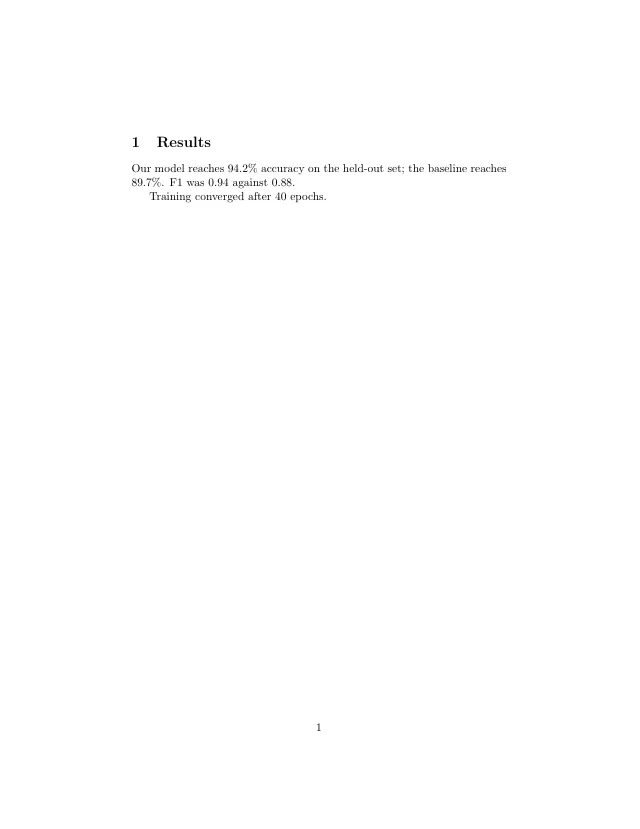
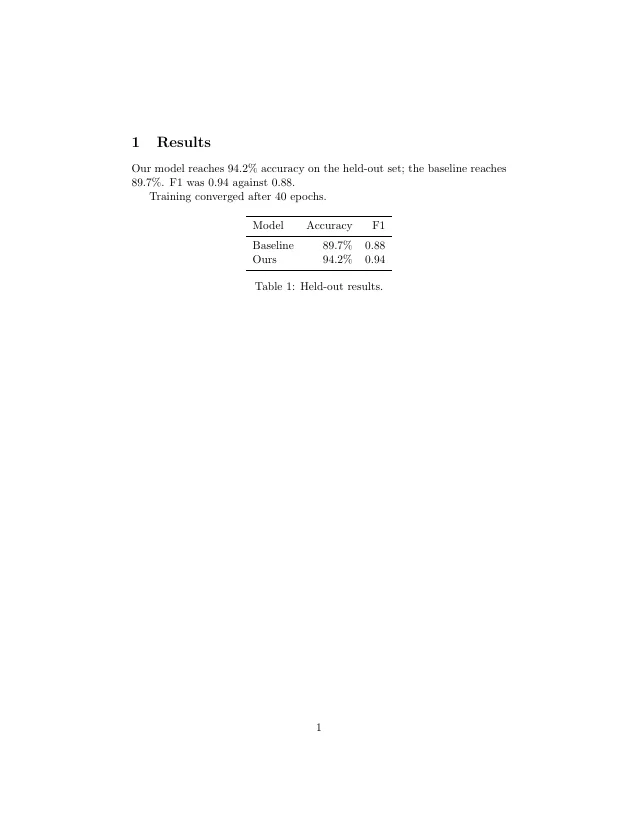
Una réplica del editor que ejecuta la secuencia real de herramientas. Elige cualquiera para ir directamente a ella.
¿Ya trabajas con Claude o ChatGPT? LetX aparece en el directorio de conectores de Claude y cuenta con un servidor MCP, así que, con un plan de pago, tu asistente también puede compilar y editar tus proyectos de LetX.
Plantillas al instante
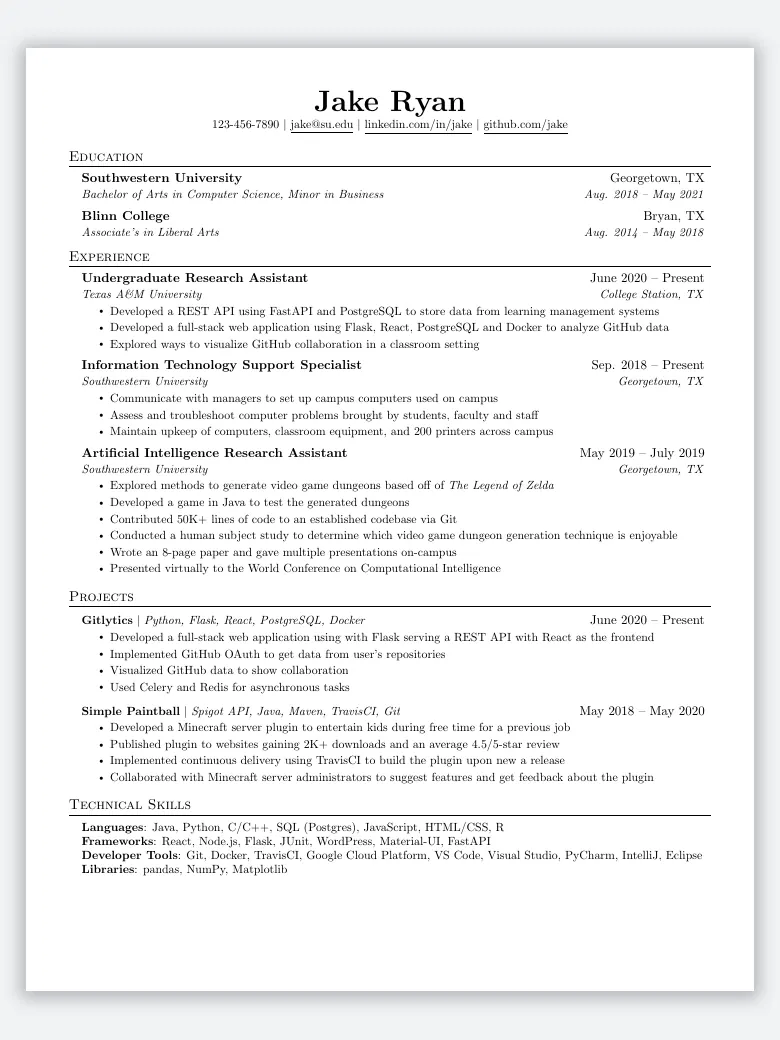
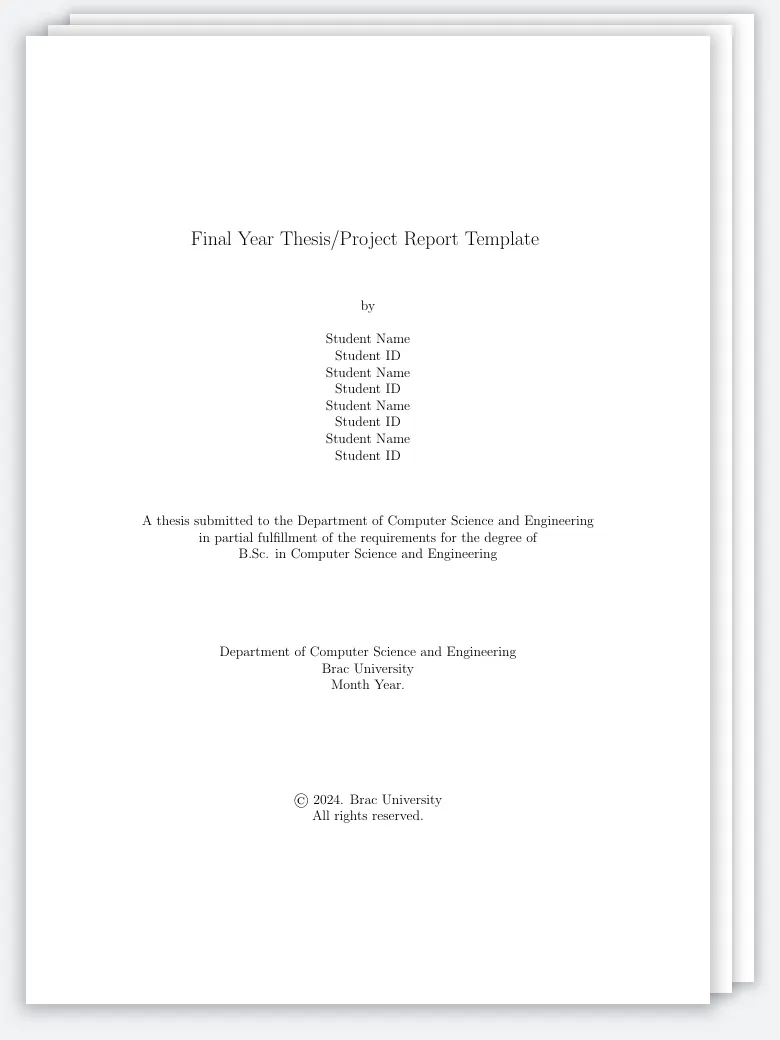
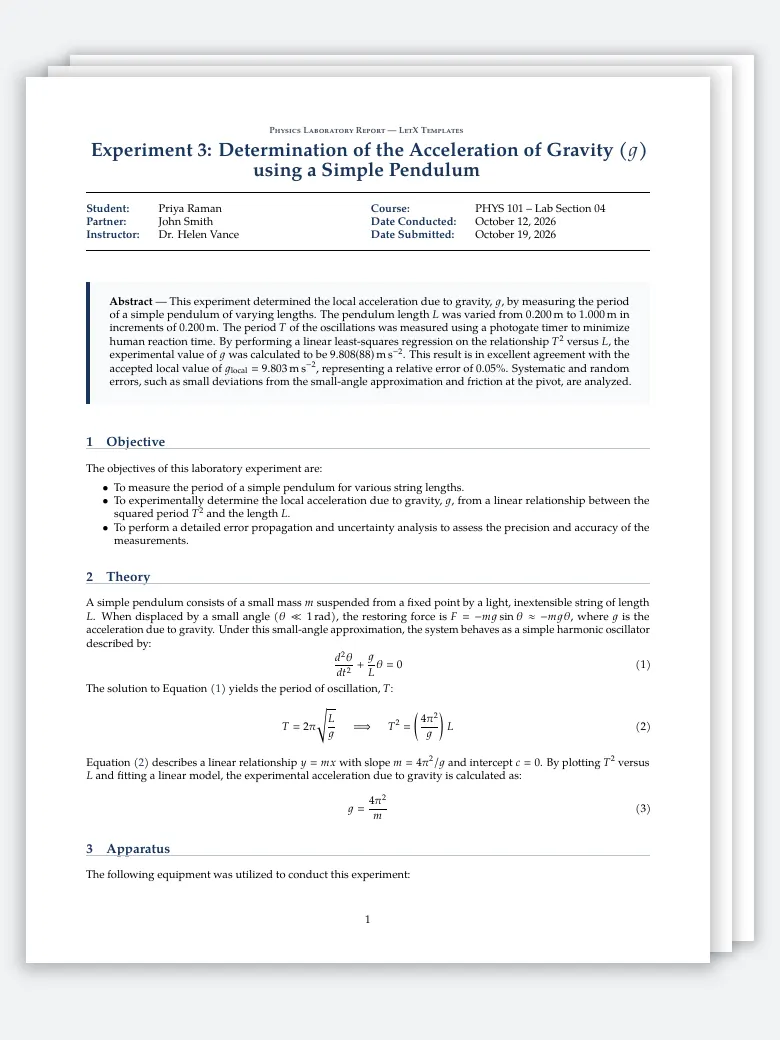
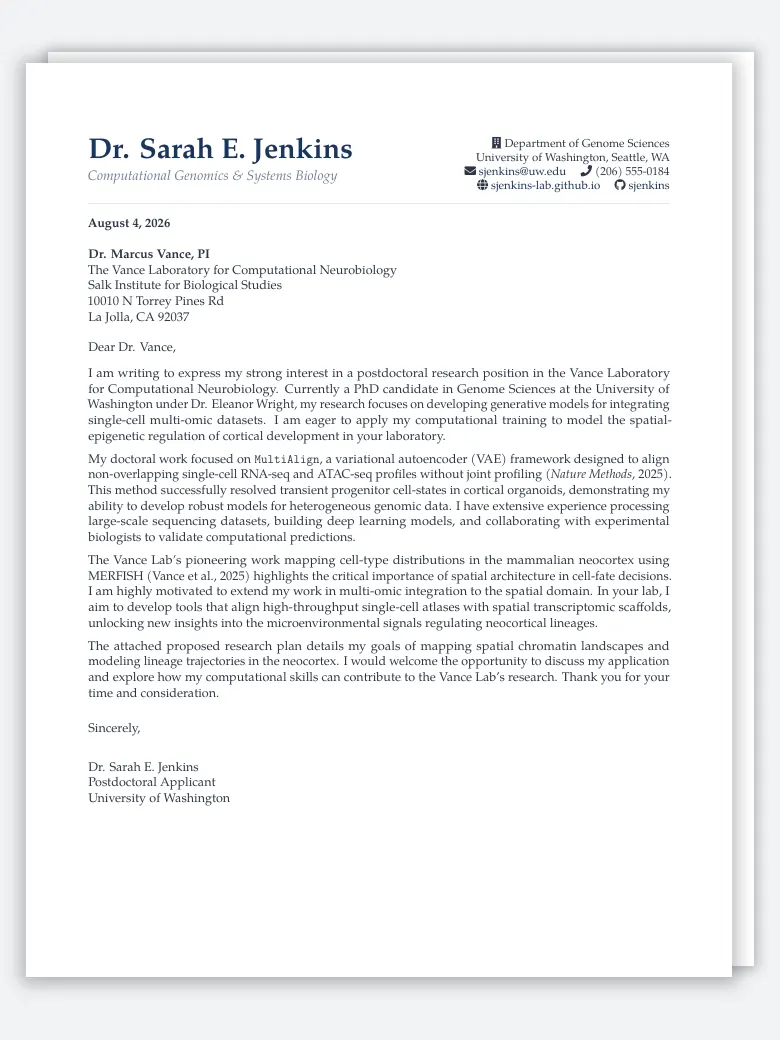
No empieces de cero. Plantillas listas para presentar a editoriales, para revistas, tesis, currículos académicos y profesionales, y mucho más.
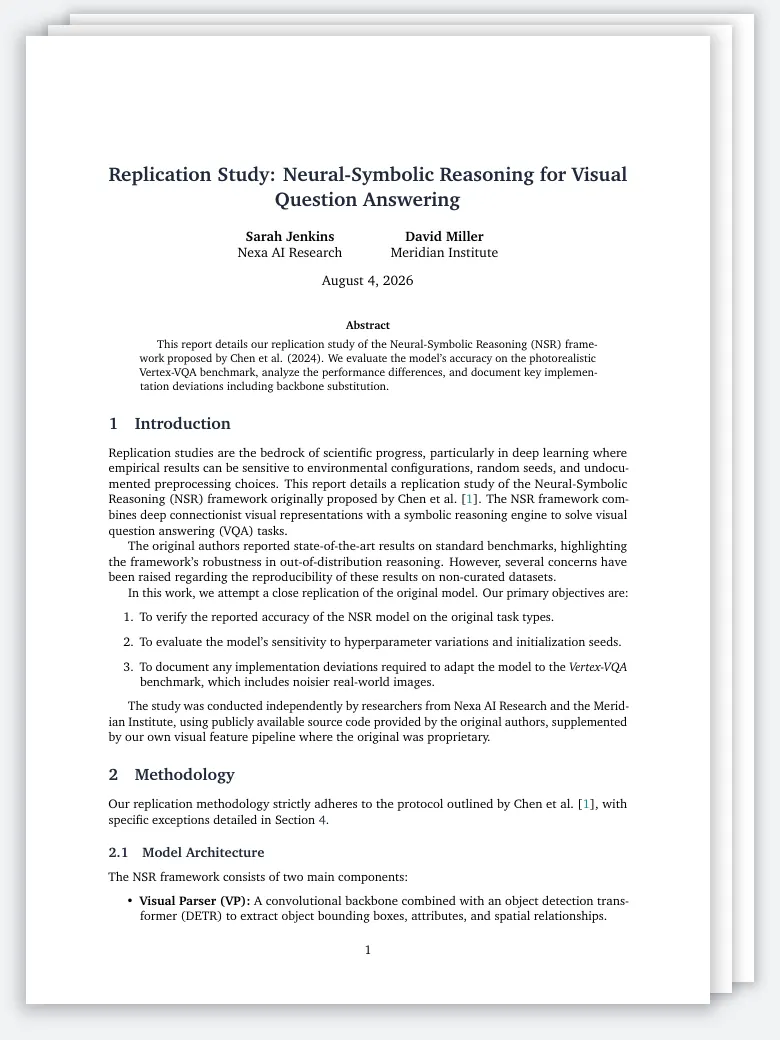
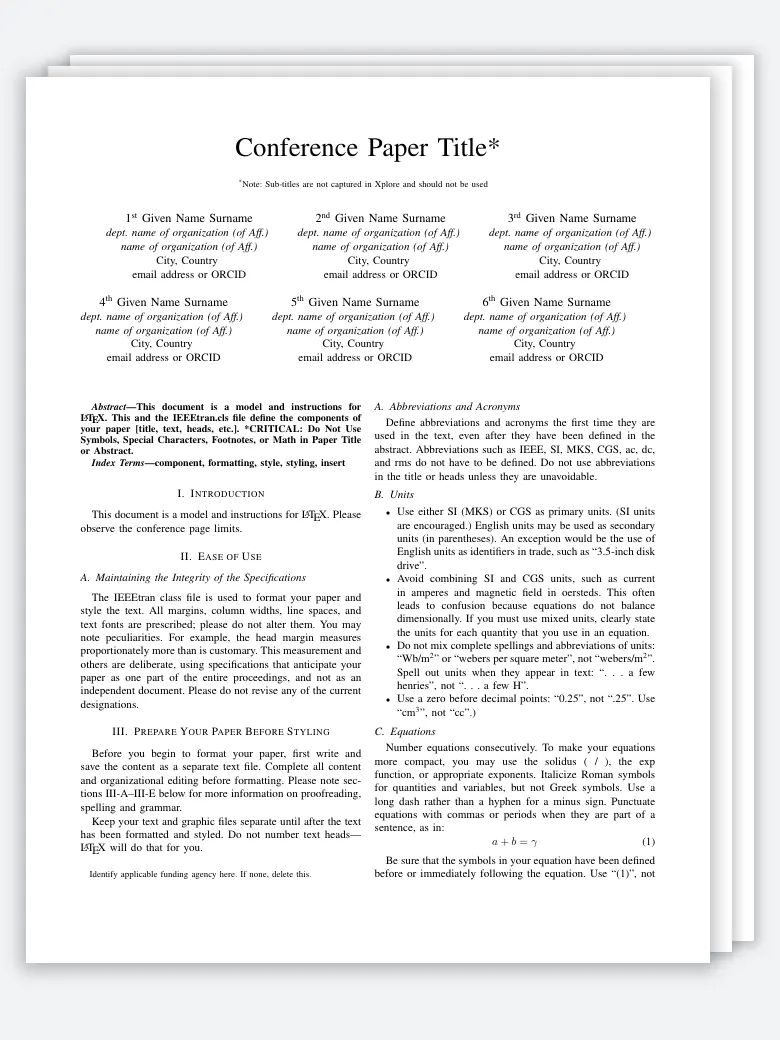
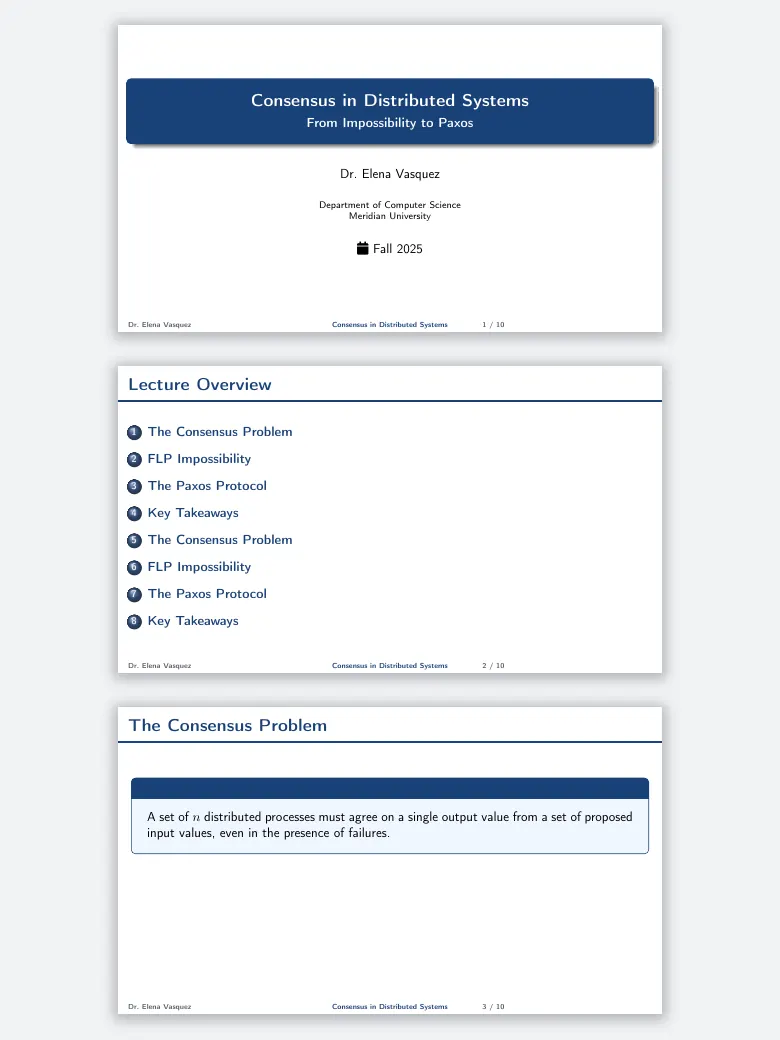
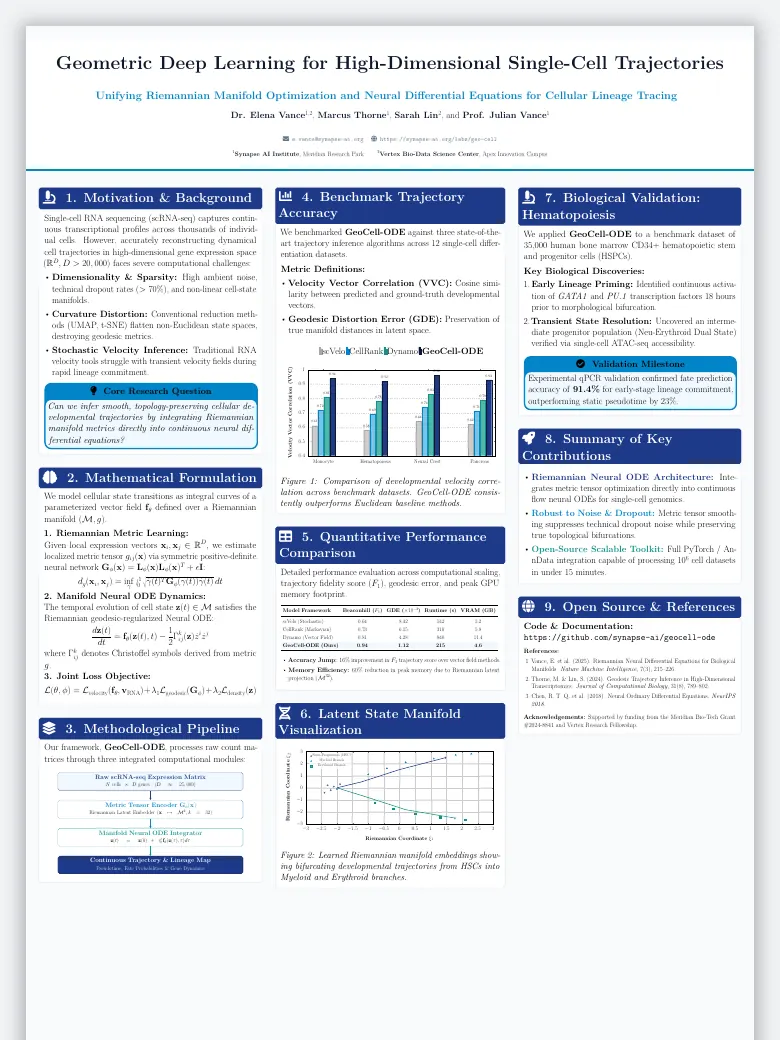
A estudiantes y docentes les encanta
Desde el laboratorio antes de la tesis hasta el despacho del profesorado, esto es lo que dicen estudiantes e investigadores de BRAC University, McGill y otras instituciones sobre escribir en LetX.
LetX permite que varias personas editen a la vez, y no me he encontrado con ningún límite en la cantidad.
Traducido del inglés. Nombres e instituciones tal como los indicaron las personas.
¿Quieres escribir tu obra maestra?
Únete hoy a los 7,900+ estudiantes e investigadores que escriben en LetX.
Creado por investigadores, para investigadores.
Aceleramos los descubrimientos científicos al eliminar las trabas de la escritura.

Shihab Shahriar Antor
"Simplificar el futuro de la escritura académica para investigadores de todo el mundo."

Ashraful Kabir Alif
"Ayudar a los científicos a centrarse en sus ideas, no en el formato."
Ponte en contacto
¿Tienes preguntas, comentarios o necesitas ayuda? Nos encantará escucharte.
Envíanos un mensaje
Preguntas frecuentes
Todo lo que necesitas saber sobre LetX, el editor colaborativo de LaTeX en línea.
¿Qué es LetX?
LetX es un editor de LaTeX colaborativo en línea y gratuito, una alternativa a Overleaf que funciona en tu navegador sin necesidad de instalación. Los equipos escriben LaTeX juntos en tiempo real, compilan a PDF en unos pocos segundos y usan SyncTeX para saltar entre el código fuente y el resultado.
¿LetX es gratuito?
Sí. El uso de LetX es gratuito con proyectos ilimitados, colaboradores ilimitados y 40 compilaciones al día. A diferencia de Overleaf, que limita los colaboradores gratuitos, LetX nunca cobra por colaborador, y Pro elimina el límite diario de compilaciones.
¿En qué se diferencia LetX de Overleaf?
LetX ofrece colaboradores ilimitados en tiempo real gratis (Overleaf cobra si quieres más de uno en su plan gratuito), compilaciones que tardan unos pocos segundos para un documento típico y más de 1000 plantillas académicas y de currículum listas para usar. Ambos funcionan en el navegador sin instalar nada.
¿Necesito instalar algo para usar LetX?
No. LetX está totalmente basado en la web y funciona en Mac, Windows y Linux en cualquier navegador moderno. No hay ninguna distribución de LaTeX que instalar, la compilación se ejecuta en los servidores de LetX.
¿Puedo colaborar con otros en tiempo real?
Sí. LetX usa la tecnología Yjs CRDT (la misma clase de algoritmo que Figma) para una edición en tiempo real sin conflictos de fusión. Varias personas pueden editar el mismo documento simultáneamente y ver los cursores de los demás.
¿Puedo importar mi proyecto existente de Overleaf o LaTeX?
Sí. Usa '+ Nuevo proyecto' y selecciona 'Subir ZIP' para importar un proyecto de LaTeX existente, incluyendo los proyectos exportados desde Overleaf.
¿Quién usa LetX?
Estudiantes e investigadores de 530+ universidades y laboratorios de investigación en 70+ países escriben en LetX. Los grupos más grandes están en la BRAC University, la Universitas Negeri Surabaya, la UNAM, la UC San Diego y la Universidad de Windsor. Se utiliza ampliamente para tesis, artículos de revistas e informes de laboratorio.